
Save as PDF or print — the answers and worked solutions live online, where your work gets marked free.
Examinations Council of Zambia — past paper
ECZ 2010 O-Level Paper 1 — Mathematics
33 questions · downloaded from g12titan.com, where this paper is marked free online

1.
Set A has 32 subsets. Find n(A).
- A6
- B5
- C16
- D32
2.
Use set notation to describe the shaded region in the Venn diagram.
- A(B u C) n A'
- B(B n C) u A'
- C(B u C) u A'
- DA n (B u C)
3.
Given that 2x-41 34 = 10-8, find the value of x.
- A1
- B-1
- C4
- D2
4.
How many lines of symmetry does a regular heptagon have?
- A14
- B1
- C0
- D7
5.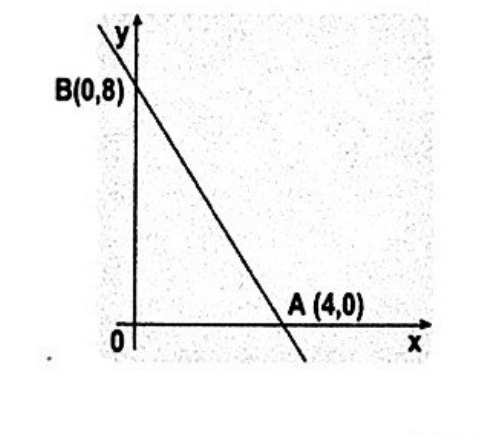
The points A and B are (4, 0) and (0, 8) respectively. Find the equation of AB.
- Ay = 2x + 8
- By = -2x + 8
- Cy = -x + 8
- Dy = 8x - 2
6.
For the function g(x) = 4x - 32x - 5, find g(-1).
- A1
- B-1
- C73
- D-7
7.
For the function g(x) = 4x - 32x - 5, find g-1(x).
- A2x - 54x - 3
- B5x + 32x + 4
- C5x - 32x - 4
- D4x - 32x - 5
8.
In the diagram, O is the centre of circle ABCD and ECT is a tangent at C. Explain why angle OCT = 90°.
- ABecause a tangent is perpendicular to the radius at the point of contact
- BBecause angle OCT is an angle in a semicircle
- CBecause OC and CT are equal in length
- DBecause OCT is an exterior angle of the circle
9.
In the diagram, BD = 9 cm and DT = 3 cm, with ECT a tangent at C. Calculate the length of CT.
- A3 cm
- B9 cm
- C12 cm
- D6 cm
10.
For the sequence 7, 9, 11, 13, ... write down the eleventh term.
- A25
- B23
- C29
- D27
11.
For the sequence 7, 9, 11, 13, ... write down the expression for the nth term.
- A2n + 7
- Bn + 6
- C7n + 2
- D2n + 5
12.
The bearing of a point B from A is 129°. What is the bearing of A from B?
- A051°
- B231°
- C309°
- D129°
13.
Describe fully the rotational symmetry of a 72-sided regular polygon with centre K.
- AOrder 36, angle 10° about K
- BOrder 72, angle 5° about K
- COrder 72, angle 72° about K
- DOrder 5, angle 72° about K
14.
Two towns P and Q lie on latitude 43° north. P is on longitude 23° west while Q is on longitude x degrees east. If the difference in longitude between P and Q is 63°, state the value of x.
- A40
- B20
- C86
- D63
15.
A match is scheduled to kick off at exactly 15 00 hours local time at Q. What will be the kick off time at P?
- A19 12 hours
- B11 48 hours
- C10 48 hours
- D13 12 hours
16.
In the diagram, PQR is parallel to STV, angle SQT = 90°, angle QST = 42° and PQ = QT. Calculate angle TQR.
- A42°
- B48°
- C90°
- D132°
17.
Using the same diagram, calculate angle PTS.
- A72°
- B48°
- C24°
- D66°
18.
Using the same diagram, calculate angle PUS.
- A42°
- B66°
- C24°
- D114°
19.
Two tins are geometrically similar and the ratio of their volumes is 64 : 27. Calculate the ratio of their curved surface areas.
- A4 : 3
- B8 : 3
- C16 : 9
- D64 : 27
20.
Given that the height of the larger tin is 28 cm, calculate the height of the smaller tin.
- A21 cm
- B24 cm
- C18 cm
- D12 cm
21.
It is given that x varies inversely as the square of y and directly as z, and x = 2 when y = 3 and z = 4. Find k, the constant of variation.
- A9
- B4.5
- C2
- D18
22.
x varies directly as z and inversely as the square of y, with constant k = 4.5 (so x = 4.5zy2). Find y when x = 3 and z = 24.
- A36
- B12
- C4
- D6
23.
A pupil takes one bottle top at random from a bag. The probability that it is a Fanta top is 0.25 and the probability that it is a Sprite top is 0.4. Find the probability that it is a Cocacola top.
- A0.65
- B0.6
- C0.15
- D0.35
24.
Find the probability that the bottle top is not a Sprite bottle top.
- A0.4
- B0.35
- C0.6
- D0.75
25.
Originally there were 16 Sprite bottle tops in the bag. Find the total number of bottle tops that she had.
- A64
- B24
- C32
- D40
26.
Triangle XYZ has vertices X(-5, 1), Y(-3, 1) and Z(-5, 5). Find the vertices of its image under a reflection in the line x = 0.
- AX1(5, 1), Y1(3, 1), Z1(5, 5)
- BX1(-5, -1), Y1(-3, -1), Z1(-5, -5)
- CX1(1, -5), Y1(1, -3), Z1(5, -5)
- DX1(5, -1), Y1(3, -1), Z1(5, -5)
27.
Triangle X1Y1Z1 with vertices (5, 1), (3, 1), (5, 5) is mapped onto triangle X2Y2Z2 with vertices (1, 5), (1, 3), (5, 5). Name the transformation.
- ARotation
- BTranslation
- CReflection
- DEnlargement
28.
Describe fully the single transformation which maps triangle XYZ with vertices (-5, 1), (-3, 1), (-5, 5) onto triangle X2Y2Z2 with vertices (1, 5), (1, 3), (5, 5).
- ARotation of 90° anticlockwise about the origin
- BReflection in the line y = x
- CRotation of 90° clockwise about the origin
- DRotation of 180° about the origin
29.
Factorize completely 4u2/a2 - 19.
- A(2ua - 13)(2ua + 13)
- B2ua - 132
- C(4ua - 19)(4ua + 19)
- D(2ua)(13)
30.
Mr Saukani takes three hours to drive from town A to town B at a speed of 80 km/h. How long would it take him to drive from A to B if he increased his speed to 96 km/h?
- A3.6 hours
- B2 hours
- C2.5 hours
- D4 hours
31.
Triangle PQR has vertices P(-1, 2), Q(2, 2) and R(-1, -1). Write down the three inequalities which define the region inside the triangle.
- Ax ≤ -1, y ≥ 2, y ≤ x
- Bx ≥ -1, y ≤ 2, y ≥ x
- Cx ≥ -1, y ≥ 2, y ≤ x
- Dx ≤ -1, y ≤ 2, y ≥ x
32.
Train A accelerates from rest to 50 m/s in 4 seconds, travels at that speed for 6 seconds, then stops in a further 2 seconds. Train B accelerates from rest to v m/s in 6 seconds then comes to rest in a further 6 seconds. Given that the trains moved the same distance, calculate v.
- A50
- B60
- C100
- D75
33.
Find the distance between the trains during the first 6 seconds.
- A50 m
- B25 m
- C75 m
- D15 m