
Save as PDF or print — the answers and worked solutions live online, where your work gets marked free.
Examinations Council of Zambia — past paper
ECZ 2019 GCE Paper 2 — Mathematics
12 questions · downloaded from g12titan.com, where this paper is marked free online

1.
(a)
Simplify 10x3 y235x5 y4 ÷ 2x2 y27x4 y2. [2]
(b)
In a geometric progression, the third term is 16 and the fifth term is 4. Calculate
(b(i))
the first term and the common ratio, [3]
(b(ii))
the tenth term, [2]
(b(iii))
the sum to infinity. [2]
2.
(a)
The determinant of matrix Q = 812x - 4x is 8. Find
(a(i))
the value of x, [2]
(a(ii))
the inverse of Q. [2]
(b)
The Venn diagram below shows the optional subjects that all the Grade 10 learners at Kusambilila Secondary School took, in a particular year.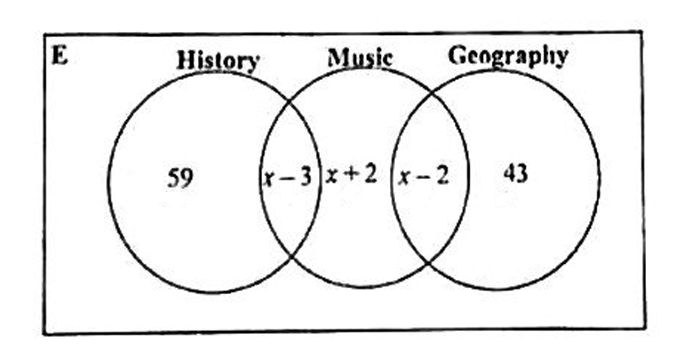
(b(i))
Given that 12 learners took Music, find the value of x. [2]
(b(ii))
How many learners were in Grade 10 this particular year? [1]
(b(iii))
Find the number of learners who took
(b(iii)(a))
one optional subject only, [1]
(b(iii)(b))
two optional subjects only. [1]
3.
(a)
Express 6n - 3 - 5n - 2 as a single fraction in its simplest form. [3]
(b)
In the diagram below, OA = a, OB = b and ACCB = 12.
(b(i))
Express in terms of a and/or b
(b(i)(a))
AB, [1]
(b(i)(b))
AC, [1]
(b(i)(c))
OC. [1]
(b(ii))
Given that M is the midpoint of OC, show that AM = (16)(b - 4a). [2]
4.
(a(i))
Construct a triangle JKL in which KL = 8 cm, KJ = 6 cm and JL = 10 cm. [1]
(a(ii))
Measure and write angle JLK. [1]
(b)
Within the triangle JKL, draw the locus of points which are
(b(i))
5 cm from J, [1]
(b(ii))
3 cm from JL, [1]
(b(iii))
equidistant from JK and JL. [2]
(c)
A point Q, within triangle JKL, is such that it is greater than or equal to 5 cm from J, less than or equal to 3 cm from JL and nearer to JK than to JL. Indicate by shading the region in which Q must lie. [2]
5.
(a)
Solve the equation 13 - 9x - 5x2 = 0, giving your answers correct to 2 decimal places. [5]
(b)
Thirteen cubes of the same size numbered 1 to 13 are placed in a bag. If two cubes are drawn at random from the bag one after the other and not replaced, what is the probability that
(b(i))
both cubes are odd numbered, [2]
(b(ii))
only one is even numbered. [3]
6.
(a)
The gradient function of a curve is y = 6x + 8. Find the equation of the curve passing through the point (1, 2). [3]
(b)
The flow chart below shows the steps in calculating the volume of a solid given the base area (A) and height (h).
Write the corresponding pseudocode for the flow chart given above. [5]
7.
Answer the whole of this question on a sheet of graph paper.
Mipando makes two types of chairs for sale; dining and garden. He intends to make at least 10 dining chairs and at least 20 garden chairs. He wants to make not more than 80 chairs altogether. The number of garden chairs must not be more than three times the number of dining chairs.
(a)
Let x be the number of dining chairs and y the number of garden chairs. Write four inequalities to represent the information above. [4]
(b)
Using a scale of 2 cm to represent 10 chairs on each axis, draw x and y axes for 0 ≤ x ≤ 80 and 0 ≤ y ≤ 80 respectively and shade the unwanted region to indicate clearly the region where the solution of the inequalities lie. [4]
(c)
Given that the profit on the sale of a dining chair is K80.00 and profit on a garden chair is K50.00, how many chairs of each type should Mipando make in order to maximize the profit? [2]
(d)
What is this maximum profit? [2]
8.
(a)
In triangle ABC below, AC = 275 km, angle BAC = 125° and angle ACB = 40°.
Calculate
(a(i))
the distance BC, [4]
(a(ii))
the area of triangle ABC, [2]
(a(iii))
the shortest distance from A to BC. [2]
(b)
Solve the equation 13 cos θ = 5 for 0° ≤ θ ≤ 360°. [2]
(c)
Simplify 2x2 - 18x + 3. [2]
9.
The table below shows the distribution of the ages of 30 football players at a school.
Age x years10111213141516Frequency0257862
(a)
Calculate the standard deviation. [6]
(b)
Answer this part of the question on a sheet of graph paper.
(b(i))
Using the table above, copy and complete the relative cumulative frequency table below.
Age x years≤ 10≤ 11≤ 12≤ 13≤ 14≤ 15≤ 16Cumulative Frequency02714222830Relative cumulative frequency0.000.070.231.00 [1]
(b(ii))
Using a scale of 2 cm to represent 1 unit on the x-axis for 10 ≤ x ≤ 16 and a scale of 2 cm to represent 0.1 units on the y-axis for 0.0 ≤ y ≤ 1.0, draw a smooth relative cumulative frequency curve. [3]
(b(iii))
Showing your method clearly, use your graph to estimate the 90th percentile. [2]
10.
(a)
The diagram below shows a frustum TQRS of a cone. [Take π as 3.142]
Given that US = 3 cm, UV = 10 cm and RV = 8 cm, calculate its volume. [6]
(b)
The points K, L and M are on the surface of the earth as shown in the diagram below. [Take π as 3.142 and R = 6 370 km]
(b(i))
Find the difference in longitude between points K and L. [2]
(b(ii))
Find, in kilometres, the distance
(b(ii)(a))
LM, [2]
(b(ii)(b))
KL. [2]
11.
Study the diagram below and answer the questions that follow.
(a)
An enlargement maps triangle ABC onto triangle A1B1C1. Find
(a(i))
the centre of enlargement, [1]
(a(ii))
the scale factor. [1]
(b)
Triangle ABC is mapped onto triangle A2B2C2 by a single transformation. Describe fully this transformation. [3]
(c)
Triangle ABC is mapped onto triangle A3B3C3 by a stretch. Find
(c(i))
the matrix which represents this transformation, [3]
(c(ii))
find the area scale factor. [1]
(d)
A transformation 1021 maps triangle ABC onto triangle A4B4C4, not drawn on the diagram. Find the coordinates of A4, B4 and C4. [3]
12.
Answer this part of the question on a sheet of graph paper.
The values of x and y are connected by the equation y = x3 - 5x + 3. Some corresponding values of x and y are given in the table below.
x-3-2-10123yk573-1115
(a(i))
Calculate the value of k. [1]
(a(ii))
Using a scale of 2 cm to 1 unit on the x-axis for -3 ≤ x ≤ 3 and 2 cm to represent 5 units on the y-axis for -10 ≤ y ≤ 20, draw the graph of y = x3 - 5x + 3. [3]
(a(iii))
Use your graph to
(a(iii)(a))
solve the equation x3 - 5x = 0, [2]
(a(iii)(b))
estimate the area bounded by the curve, y = 3 and x = -2. [3]
(b)
Find the equation of the tangent to the curve y = (2x + 3)3 at the point where x = -1. [3]